ISRAEL · EUROTEC GROUPBuild your fitness spaceעברית
Equipment selection
Selectorized, plate-loaded or cables: planning a strength zone
Compare setup, space and simultaneous use, then combine machine types without unnecessary duplication.
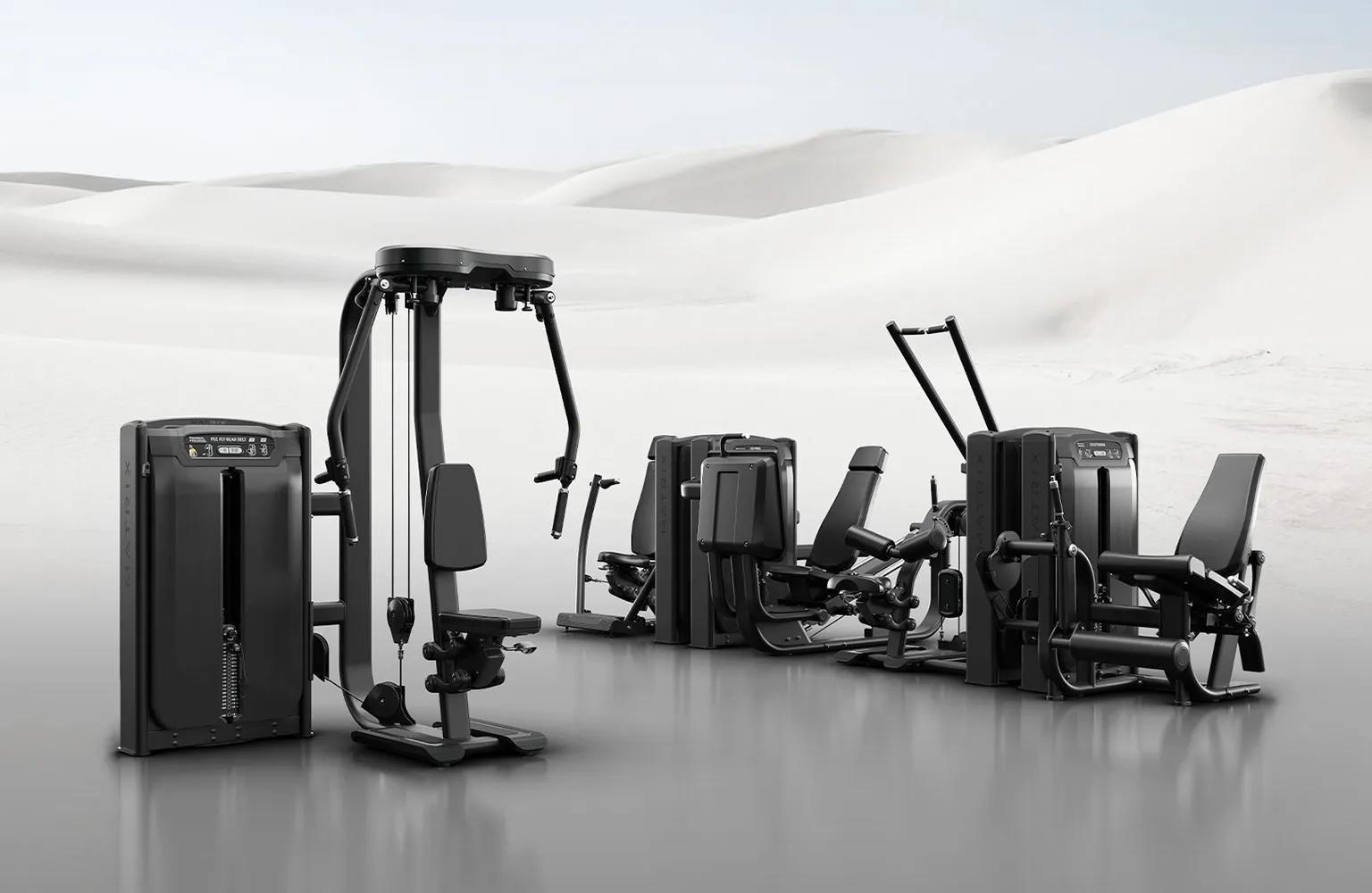
Strength equipment includes several families with different operating patterns. The choice affects coaching, setup time, accessory storage and free space. Compare the role of each station in the room rather than choosing only by appearance or the stated resistance weight.
Exercise variety and simultaneous capacity are different measures. A versatile station is not necessarily a multi-user station.
Selectorized strength: integrated resistance
A selectorized station typically uses a pin to select resistance from an integrated weight stack. This can simplify user changeovers and room organization because plates do not need to be moved for each load change. Seat adjustment, starting position, movement path and model instructions still matter. Individual stations can differ substantially within the same family.
Plate-loaded equipment: plan beyond the machine
Plate-loaded machines accept plates on designated loading points. Plan suitable plate inventory, nearby storage and access to both sides where needed. Plate weight alone cannot meaningfully compare stations: different levers, angles and movement paths change how resistance feels. Assess the actual model.
Cables: versatility needs room
Cable stations offer pulling positions and attachment options according to their design. Their footprint does not describe the entire exercise area. A user may step away from the column, change pulley height or add a bench. Show pulling directions and handle storage so versatility does not turn into blocked circulation.
Free weights and racks
Benches, dumbbells, power racks and Smith stations sit within the site’s free-weight planning category. Consider taking a weight from storage, carrying it to the training position and returning it. For racks and Smith stations, account for bar length, loading access and compatible accessories. Storage is part of the workout sequence, not leftover space.
Combine the families deliberately
A smaller space may favor combination stations, while heavy simultaneous demand may justify independent positions. Identify which movements are already covered and what is missing. Review the mix with the operating team so it reflects coaching and the intended users.
| Family | Key planning consideration |
|---|---|
| Selectorized | Clear adjustment and user changeovers |
| Plate-loaded | Loading access and plate storage |
| Cables | Exercise envelope and attachment management |
| Free weights | Movement between storage and the exercise position |
THE NEXT STEP
Bring this to your next meeting
- Map stations to movements and uses.
- Count positions that can operate independently.
- Plan storage for plates, handles and dumbbells.
- Check the operating envelope of every station.
Questions to resolve during planning
Do equal stack weights mean equal resistance?
Not necessarily. Cable ratios and mechanism design affect resistance at the handle. Compare model documentation rather than only the number on the stack.