ISRAEL · EUROTEC GROUPBuild your fitness spaceעברית
Equipment selection
Choosing commercial gym equipment: a mix that works together
What to establish before choosing models, how to anticipate bottlenecks and how to compare quotations on equal terms.
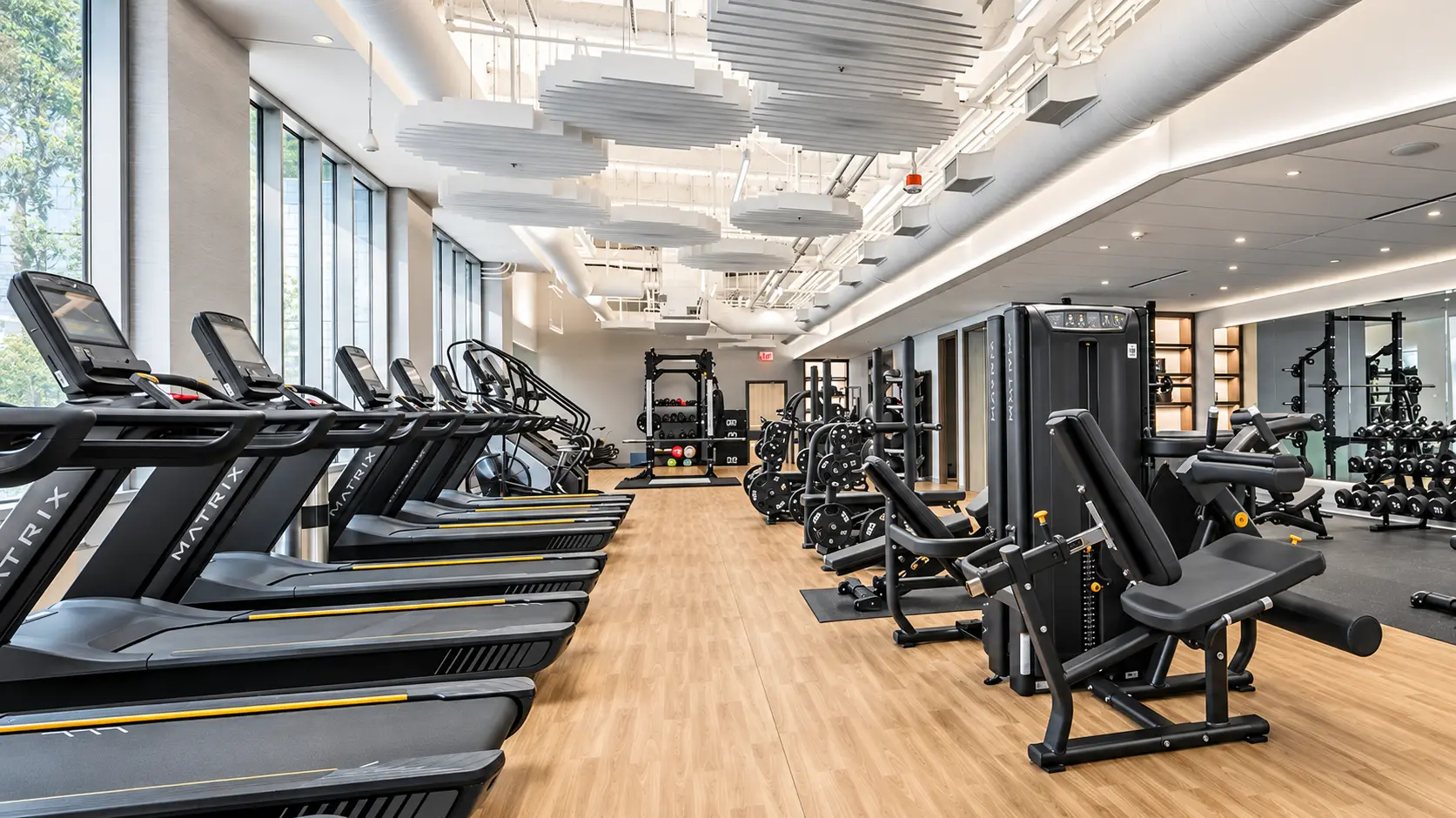
A commercial gym specification needs to work as a system. A well-chosen treadmill cannot compensate for a missing core strength station, and a large machine count does not guarantee a good flow between zones. Start with the training experience the club intends to provide, then assess demand, coaching, space and operations.
A catalog introduces options; a specification requires decisions. Use one schedule that connects each role in the gym to a model, configuration, quantity and a short reason for its inclusion.
Every specification line should serve a defined user or operational need.
Map activities before comparing series
Separate cardio, selectorized strength, plate-loaded equipment, cables, free weights and group training. For each zone, define its main activities, coaching approach and expected simultaneous use. This exposes duplication: two visually different stations may serve nearly the same purpose while another training need remains unaddressed.
Walk through peak demand
Walk through the layout as if the club were operating. Where do people wait, change attachments and move between exercises? A versatile cable station can become a bottleneck when multiple routines depend on it. An additional independent station may be more valuable than another function attached to the same occupied position.
Specify the exact MATRIX configuration
The model name is only the beginning. Where alternatives exist, identify the console, finish, weight-stack version and accessories. Do not assume a catalog image means every visible option is included. Distinguish base equipment, requested additions and items awaiting compatibility confirmation.
| Comparison item | What to record |
|---|---|
| Machine | Model and SKU, intended use and quantity |
| Configuration | Console, version, finish and included accessories |
| Installation | Delivery, access, assembly and infrastructure |
| Service | Coverage, exclusions and the service-request process |
Consider the cost of operation
Purchase price is one component. Consider software where required, maintenance, consumables, service access and whether a machine can be serviced without closing an entire zone. There is no need to invent a precise long-term forecast. Ask for a clear breakdown of known costs and identify those that depend on usage.
Allow the club to evolve
Separate the base specification from prioritized additions. This makes budget comparisons possible without removing essential functions arbitrarily. Plan access, infrastructure and opportunities to reposition equipment. After opening, refine the mix using actual usage patterns rather than intuition alone.
THE NEXT STEP
Bring this to your next meeting
- The activities the club intends to support.
- A layout showing circulation and operating envelopes.
- A comparison by model and configuration, not only series name.
- A clear distinction between base equipment and additions.
Questions to resolve during planning
Does every machine need to belong to one series?
Not necessarily. Series can be combined according to function, budget and design, provided the actual models and their suitability for operation are checked.