ISRAEL · EUROTEC GROUPBuild your fitness spaceעברית
Planning & architecture
Gym flooring and acoustics: choose a system, not just a thickness
Understand room noise and structural vibration, ask better flooring questions and coordinate equipment, substrate and use.
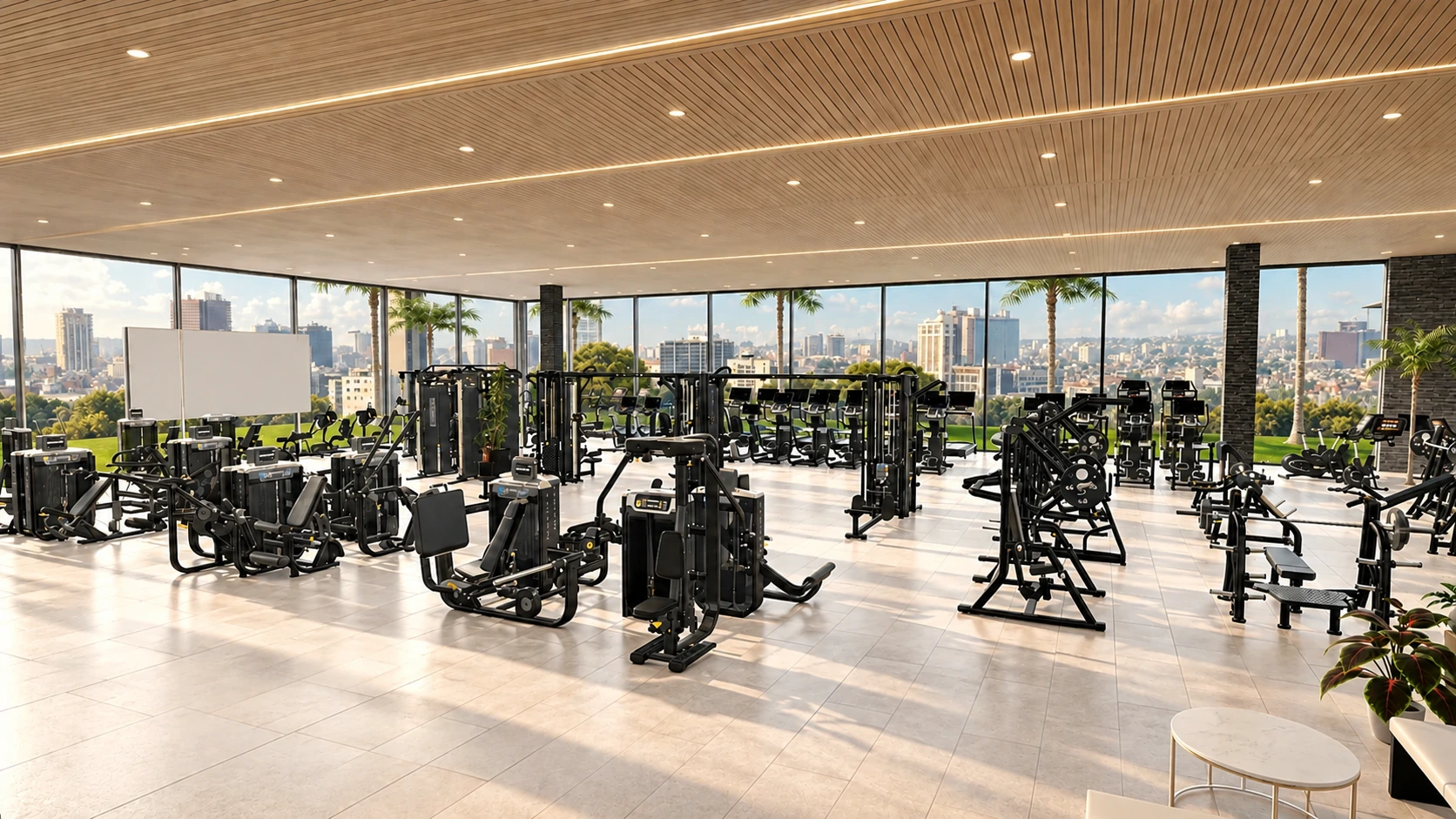
Gym flooring starts with what happens on it and what lies beneath it. Treadmills, weight stacks and plate training create different operating conditions. In a residential building, hotel or campus, consider adjoining spaces as well as comfort inside the gym.
Rubber thickness is one specification value. Performance depends on the flooring assembly, building and noise source.
Identify the problem to address
Distinguish airborne sound, reflections within the room and vibration transmitted through the structure. Music and conversation are different from a weight impact or repetitive machine action. A sound-absorbing finish is therefore not automatically a vibration-isolation solution. Describe the disturbance, its location and the space to protect.
Describe the whole floor assembly
Request a specification for the substrate, intermediate layers, finish and edge details. Plan transitions from rubber to other finishes for practical circulation, cleaning and access. When acoustic test data is provided, identify the tested assembly and laboratory conditions; it cannot by itself predict the result in a different building.
Locate activities before choosing finishes
Mark strength, free-weight, cardio and movement zones. Consider whether sensitive activities can move away from quiet rooms and how their position relates to the structure. Early layout decisions can offer options that a finish replacement alone cannot. Review the solution with an acoustic consultant and the relevant design team.
Consider the equipment as a source
Alongside flooring, review machine operation, condition and opportunities to address noise at the source. MATRIX VRS is a separate compatibility question for the model and configuration. A machine kit should not be assumed to replace room-wide acoustic design, and a thicker flooring product is not automatically the appropriate choice.
Agree on assessment and upkeep
Before ordering, agree on scope, assumptions and the assessment method with the project team. A sample or assembly mockup can be useful where it resolves a design question. Choose cleaning products, installation conditions and maintenance according to the flooring instructions. This connects the specified system with what is installed and maintained.
| Information to collect | Why it matters |
|---|---|
| Activities and equipment | To characterize noise sources and loads |
| Floor section and adjoining spaces | To understand the building assembly |
| Product test reports | To compare under relevant conditions |
| Installation and maintenance details | To implement the system as designed |
THE NEXT STEP
Bring this to your next meeting
- An activity plan and existing or proposed floor section.
- Locations of apartments, guest rooms or nearby quiet spaces.
- A complete assembly specification and relevant test data.
- Coordination of transitions, edges and service access.
Questions to resolve during planning
Does rubber flooring solve every noise problem?
No. The solution depends on the source, building and installed assembly. Assess the specific scenario and define expectations that can be evaluated.